
Web application development in Dubai and the UAE
Custom web application development in Dubai and the UAE: portals, dashboards and internal tools, connected to your ERP, CRM and payment gateways.
What this involves
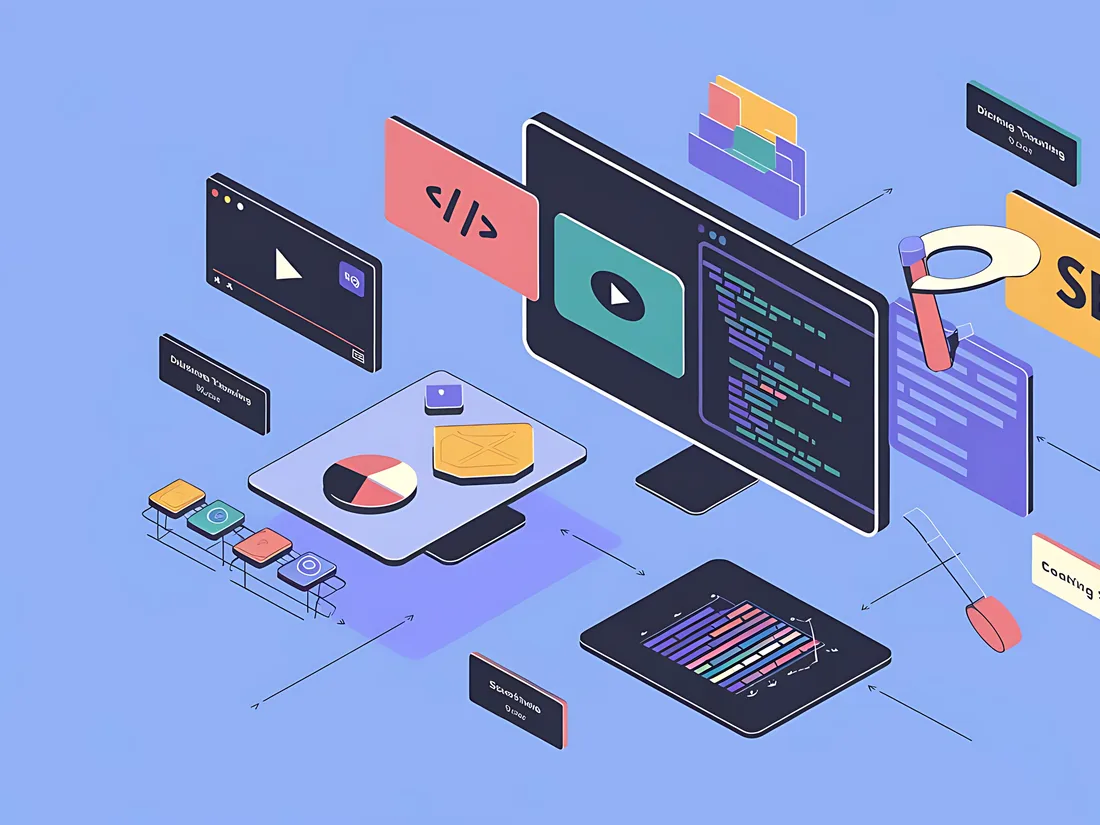
A web application is not a brochure website. It is the logged-in, data-driven system your staff, customers or partners use to get work done: an approvals dashboard, a B2B ordering portal, a booking engine, a job tracker, or a full SaaS product. We build these for businesses in Dubai and across the UAE using React, Next.js and Node.js, and we connect them to the systems you already run, so orders, invoices and customer records move without anyone re-keying them. Every project is scoped around your actual process, delivered in stages you can review and use, and built to be maintained by whoever looks after it next. Where a website or an off-the-shelf product would do the job, we will tell you that before you spend money on a custom build.
Questions
What we build
The common thread is that each of these is specific to how your business works. Typical examples are below; they describe the kinds of systems we build rather than named client projects.
- Internal tools and dashboards
- Approval workflows for purchase requests, job and project trackers, operations dashboards that pull from several systems, and admin panels that replace shared spreadsheets. A contractor might use one to route material requests through site engineer, project manager and finance sign-off.
- Customer and partner portals
- Logged-in areas where customers see orders, statements and invoices, distributors place orders against a credit limit, or suppliers upload documents. They take routine "where is my order" questions off your staff.
- Booking, ordering and workflow apps
- Booking engines, appointment scheduling, B2B ordering, field job dispatch and service request handling, with the rules your business actually applies: availability, pricing tiers, deposits, cancellation terms.
- SaaS products
- Applications you sell to many customers on subscription, which add tenancy, billing and onboarding concerns on top of a normal web app. We build and run our own SaaS product, Muhasib, so we know where those concerns bite.
When a web application is the right choice
A web application earns its cost when people need to log in and do something: enter data, approve it, track it, pay for it or report on it. If what you need is mainly to publish information and capture enquiries, a well-built website is cheaper and quicker. If a mature product already handles your process with configuration, buying is usually better than building.
Custom tends to make sense when your process is a real part of how you compete, when you are already stitching several tools together and still filling gaps by hand, or when per-user licences for a product you only half use have become a significant cost. If you are unsure which side you are on, the two guides below are a good place to start.
How we build: five stages you can inspect
We deliver in stages so you see working software regularly and can change direction before it becomes expensive. Each stage has a named deliverable you can check.
- 1. Discovery
- We map the process, user roles, data and integrations with the people who will use the system. Deliverable: a written scope, a prioritised feature list and an estimate. Involves your process owner and whoever signs off budget.
- 2. Design
- Wireframes and a clickable prototype of the key flows, tested with real users before any code is written. Deliverable: approved screens and a design system the developers build against.
- 3. Build in stages
- Development in short cycles, each ending with a demo on a staging environment you can log into. Deliverable: working features, automated tests and an updated changelog at the end of every cycle.
- 4. Launch
- Data migration, user acceptance testing, training and a planned go-live with a rollback route. Deliverable: the live system, admin documentation and a short handover session.
- 5. Support
- Monitoring, fixes, security updates and a backlog of improvements based on how people actually use the system once it is live.
Technology and UAE integrations
Our default stack is React and Next.js for the interface, Node.js for the server and APIs, and PostgreSQL for most relational data, hosted on a mainstream cloud platform. We choose widely used tools on purpose: the next developer to work on your system should not need a rare skill set.
Most of the value in a business web app sits in its connections. These are the ones UAE projects need most often.
- Payment gateways and wallets
- Card payments, digital wallets and payment links through the gateway you hold a merchant account with, using hosted payment pages where possible to keep card data out of your application.
- VAT-compliant invoicing
- Tax invoices that carry the fields the Federal Tax Authority requires, including your TRN and the VAT breakdown, with invoice data structured so it can feed the UAE e-invoicing model as it rolls out.
- ERP, accounting and CRM sync
- Two-way or one-way sync of customers, products, orders and invoices with the systems you already use, by API where available and by scheduled exchange where not.
- Messaging and notifications
- Email, SMS and WhatsApp notifications for order updates, approvals and reminders, through the official business channels.
Security, hosting and data protection
We build with the OWASP Top 10 in mind: role-based access control, validated input, parameterised queries, secure session handling, encrypted connections and secrets kept out of the codebase. Access to sensitive actions is logged so you can see who did what and when.
If your application holds personal data about customers or staff, the UAE Personal Data Protection Law applies. In practice that means collecting only what you need, controlling who can see it, keeping it no longer than necessary and being able to respond to access requests. You can host in a UAE cloud region if data residency matters to you, and we set up backups and monitoring as part of launch, not as an extra afterwards.
Engagement models and what drives cost
The biggest cost drivers are the number of user roles and screens, the complexity of the business rules and exceptions, the number and quality of the systems you need to integrate, bilingual requirements, data migration, and how much reporting you need. We price after scoping and explain what sits behind the estimate.
- Fixed scope
- A defined set of features for an agreed price. Best when requirements are clear and stable. Changes are handled through a written change request with its own estimate.
- Phased delivery
- A paid discovery stage, then the build in priced phases. Best for most business systems, because you learn from the first release before committing to the next.
- Retainer
- A monthly allocation of development time for ongoing improvement after launch. Best when the application is central to the business and keeps evolving.
Other services
All servicesMobile App Development
Mobile app development in Dubai for iOS and Android: Flutter and React Native apps with Arabic support, UAE payments and App Store publishing handled.
Custom CRM Development
Custom CRM development in Dubai for UAE businesses: built around your sales process and connected to WhatsApp, email, your ERP and accounting system.
ERP Software Development
Custom ERP software development for UAE businesses: finance, inventory, sales and operations in one system, ready for FTA VAT and UAE e-invoicing.
E-commerce Development
E-commerce development for UAE retailers in Dubai and Sharjah: Shopify or custom stores with card and BNPL payments, VAT invoices and local delivery.
Custom Software Development
Custom software development in Dubai for UAE businesses: internal systems, automation and integrations, scoped in stages, documented, tested and supported.
UI/UX Design
UI/UX design services in Dubai and the UAE: research, wireframes, prototypes and design systems for web and mobile, with proper Arabic and RTL support.
API Development & System Integration
API and system integration services in the UAE: we connect your ERP, CRM, e-commerce, payment and courier systems so data flows without manual re-entry.
Cloud, DevOps & Hosting
Cloud, DevOps and hosting services in the UAE: deployment pipelines, cloud infrastructure, backups and monitoring that keep production stable after launch.
Software Maintenance & Support
Software maintenance and support in the UAE: bug fixes, security updates, monitoring and improvements, including for systems another vendor built.
AI Integration
AI integration services for UAE businesses: document extraction, search, assistants and classification added to the systems you use, with PDPL in mind.
SaaS Development
SaaS development in Dubai: multi-tenant products with subscription billing, VAT-ready invoicing, onboarding and cloud hosting, from the team behind Muhasib.
Customer Portal Development
Customer portal development in Dubai for B2B firms: self-service ordering, statements, invoices, tickets and document exchange, connected to your ERP.
Business Process Automation
Business process automation services for UAE businesses: approvals, data entry, invoicing, reconciliations and reporting automated across your systems.
Related reading
More articles- Website vs Web Application: What's the DifferenceWebsite vs web application: the real difference, UAE examples, a quick test to tell which one your business needs, and why they are priced so differently.
- How Custom Web Applications Improve Business ProcessesHow custom web applications improve business processes: less re-keying, enforced approvals, connected systems, live data, and when off-the-shelf is better.
- PDPL Data Protection Compliance for UAE Web ApplicationsPDPL data protection compliance for UAE web applications in plain terms: consent, data minimisation, secure storage, and access and deletion requests.
- Secure Web Application Checklist for UAE BusinessesA practical secure web application checklist for UAE businesses, mapped to the OWASP Top 10 and PDPL, with testing cadence and questions for your developer.
Let’s scope your project.
Tell us what you are building. We reply within one business day.