Maritime and Shipping Software for UAE Operators
Suneeb · Founder, Engineering & delivery
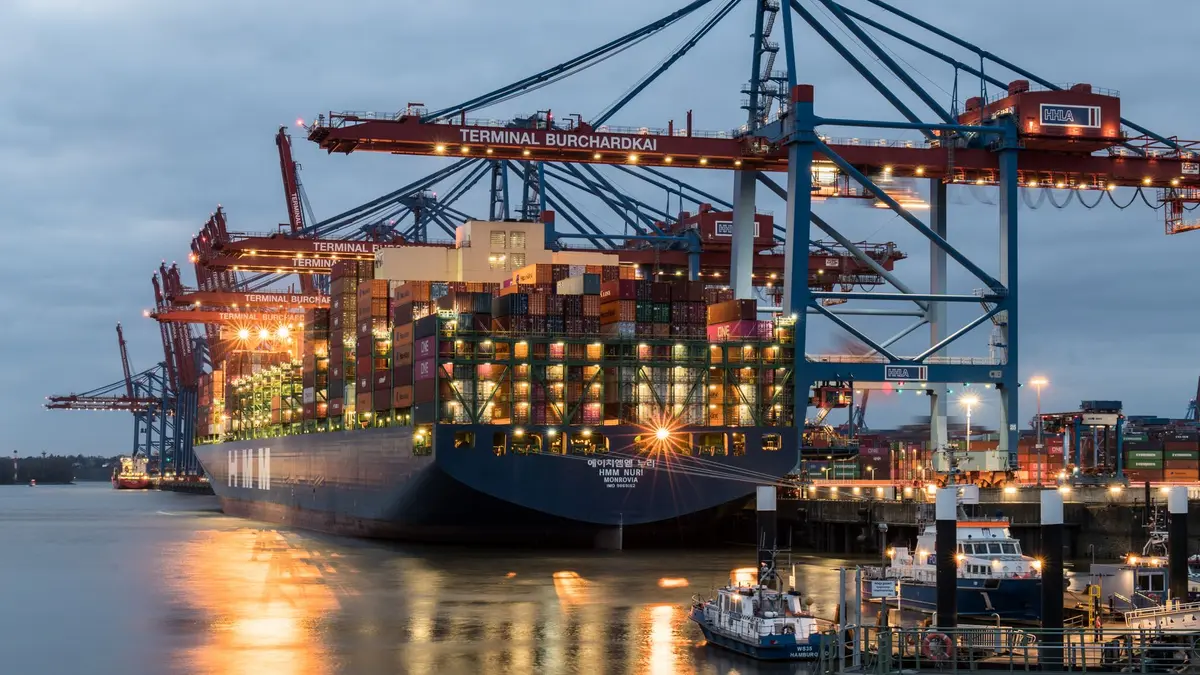
The UAE's coastline supports a maritime sector far broader than the container terminals most people picture. Ship agents handle port calls for visiting vessels; marine service companies supply bunkers, provisions, crew changes and repairs; offshore support operators run vessels for the energy sector; freight forwarders and NVOCCs move cargo through Jebel Ali, Khalifa and the other ports; and a busy leisure segment runs yacht charters, marinas and boat maintenance.
What these businesses share is a dependence on coordination. A single port call can involve the shipowner, the master, the port, customs, chandlers, surveyors and crew agencies, all communicating through email and phone at odd hours. When that coordination lives in inboxes and personal spreadsheets, information gets lost, disbursements are disputed, and the business depends on a few people who remember everything. Software is how that knowledge becomes an operational system.
Core workflows by segment
Ship agency and port call management
Agency work revolves around the port call: pre-arrival information, proforma disbursement accounts, tracking of services ordered, statements of facts, and the final disbursement account sent to the principal. Software that ties every cost to a port call, with supporting documents attached, shortens the time to settle accounts and reduces the back-and-forth that ties up working capital.
Marine services and vessel operations
For service providers and vessel operators, the focus shifts to job orders, vessel and crew scheduling, planned maintenance, certificates, and safety and incident records. Crew certificate expiries and vessel survey dates are the kind of thing that must never be tracked in someone's memory.
Freight forwarding
Forwarders need bookings, container tracking, documentation such as bills of lading, rate management and job costing, so each shipment shows its real margin once all the carrier, port and trucking costs are in.
Leisure marine
Yacht charter and marina businesses look more like hospitality: online bookings, availability calendars, deposits and payments, captain and crew allocation, berth management and maintenance schedules for the fleet.
Regulation and local context
Maritime activity in the UAE sits under federal maritime rules and emirate-level authorities. In Dubai, the Dubai Maritime Authority oversees maritime activities including licensing of marine businesses and vessels, and other emirates and port operators have their own processes and portals. Free-zone companies, and especially those around Jebel Ali, also deal with customs and free-zone documentation for goods moving through.
We describe these in general terms deliberately. Licensing categories, vessel registration rules and documentation requirements are updated from time to time, and they differ between emirates and activity types. A good system makes it easy to store, track and renew whatever licences and certificates apply; the list itself should come from the operator's compliance team and the relevant authority, checked against current requirements.
Integrations worth planning for
- Accounting and ERP — disbursements, job costing and invoicing should flow into the finance system without rekeying, with VAT treatment handled correctly.
- Vessel tracking data — AIS-based position feeds from a commercial provider can update ETAs and port call timelines automatically.
- Port and customs portals — where they provide APIs or structured exports, integration saves time; where they do not, the system should at least hold the references and documents.
- Email and messaging — much maritime communication is email; parsing or logging it against the right port call or job keeps context in one place. WhatsApp is common for crew and leisure customers.
- Payment gateways — for charter bookings and deposits, a UAE-supported gateway with proper refund handling.
Mobile and customer-facing experience
Field staff — boarding agents, surveyors, technicians, charter crews — need a mobile view of their jobs, with the ability to capture photos, signatures and time logs on board. On the customer side, principals increasingly expect a portal where they can see port call status and documents without emailing for updates, and leisure customers expect a smooth booking flow in English and often Arabic, Russian or other languages depending on the market served.
Data and KPIs
Once the operation is captured in one system, the useful numbers emerge: days to settle a disbursement account, margin per port call or per shipment, vessel utilisation and off-hire days, maintenance compliance, crew certificate status, charter occupancy by season, and customer profitability. In a sector where costs are often passed through and margins are thin, seeing true profitability per job is often the most valuable outcome of the whole project.
Off-the-shelf versus custom
There are established products for ship management, planned maintenance and freight forwarding, and an operator whose business matches one of those categories should look seriously at them first. They carry years of domain knowledge and are often the faster route.
Custom development makes more sense for mixed businesses — an agency that also runs marine services and a small fleet — or where the commercial product is built for a different market and the UAE-specific parts end up handled outside it. It also fits well as a layer on top: a principal portal, a charter booking site connected to your operations, or consolidated reporting across several systems.
Rolling it out
Start where the pain is sharpest, which for agencies is usually disbursements and for leisure operators is bookings. Migrate active jobs and current certificates first; historical data can follow if it is genuinely needed. Train operations staff on real port calls rather than test scenarios, and keep the old process available as a fallback for the first few weeks. Expect to adjust: maritime operations have edge cases that only appear once real ships are in port.
Zellarc's approach in maritime is to start with the money and the paperwork — how a job is costed, documented and billed — because that is usually where the most time is lost. From there we build or integrate the operational pieces around it, in phases that each deliver something usable.
Frequently asked questions
It can build proformas from tariffs and service templates and track actual costs against them, which removes much of the manual work. Final accounts still need review, but with all documents attached the process is far quicker.
Not always. For agencies and service providers, ETA updates from an AIS data provider are useful; for a charter business with its own boats, a simple onboard GPS tracker may be enough.
It can store and track your licences, permits and renewal dates, and remind you before they expire. The actual applications go through the authority's own channels, and requirements should be checked with them directly.
Yes. A booking site that writes directly into your scheduling, crew allocation and payments avoids double bookings and manual re-entry, which is one of the more common problems we see in that segment.