Production Planning and Shop-Floor Software for UAE Manufacturers
Suneeb · Founder, Engineering & delivery
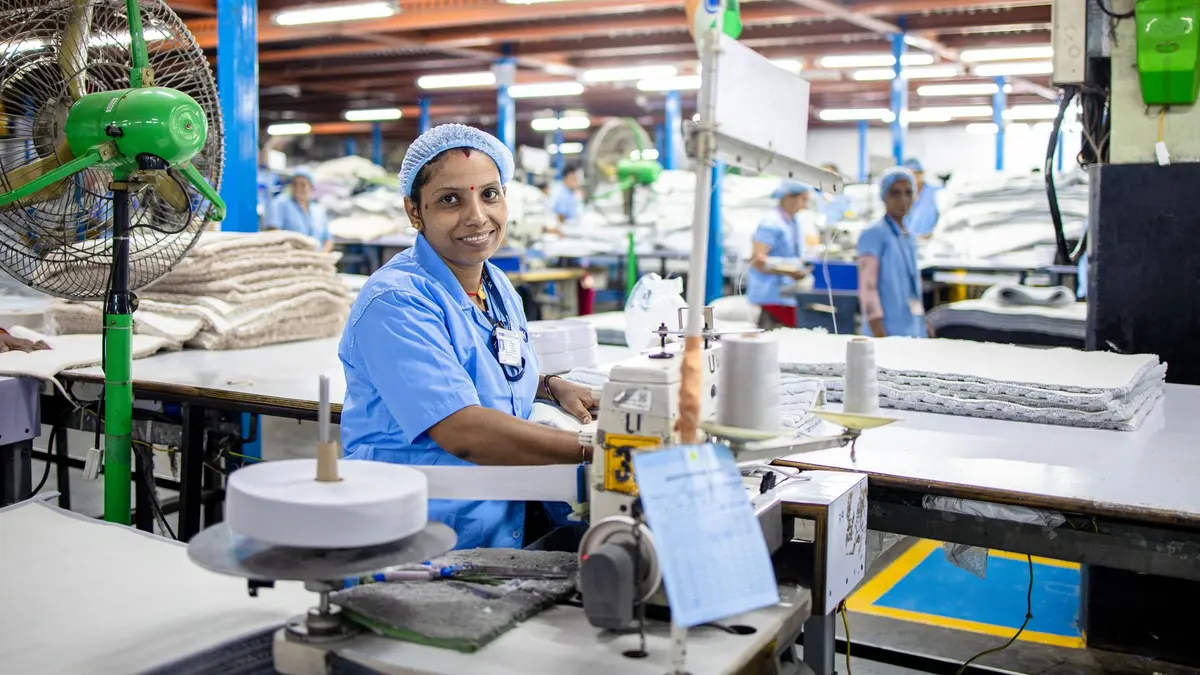
Manufacturing in the UAE is more varied than many people assume. There are food and beverage plants, plastics and packaging converters, aluminium and steel fabricators, furniture and joinery workshops, building materials producers, chemicals and cosmetics blenders, and a growing number of companies in industrial zones across Dubai, Abu Dhabi, Sharjah, Ajman and Ras Al Khaimah. Many import most of their raw materials, sell into both the local market and export, and compete on lead time as much as price.
What these businesses have in common is that small inefficiencies multiply. A wrong bill of materials quietly inflates cost on every unit. A production plan that ignores machine availability creates overtime and late deliveries. Stock that is counted in one system and consumed in another leads to shortages that stop a line. Manufacturing software exists to keep materials, machines, people and orders in step, and to show management what each product really costs to make.
What a manufacturing system has to cover
General-purpose accounting software handles sales and purchases, but manufacturing adds a layer that most business software does not touch. The essentials are:
- Bills of materials and routings — what goes into each product, in what quantities, through which operations and machines, including multi-level assemblies and variants.
- Production planning — turning sales orders and forecasts into work orders, checking material availability and capacity, and sequencing jobs sensibly.
- Shop-floor execution — issuing materials, recording start and finish, capturing output, scrap and downtime as it happens rather than at the end of the week.
- Inventory across stages — raw materials, work in progress and finished goods, with batches, lots or serial numbers where traceability matters.
- Quality control — incoming inspection, in-process checks and final inspection, with non-conformances recorded and linked to batches and suppliers.
- Costing — standard versus actual cost, including material, labour, machine time and overhead, so margins are based on reality.
- Maintenance — planned maintenance for production equipment, because an unplanned breakdown wrecks any schedule.
The UAE-specific layer
A few local factors shape what manufacturing software needs to do here. VAT applies to most sales and purchases, and many manufacturers deal with a mix of standard-rated local sales, zero-rated exports and imports with VAT handled through customs and reverse charge mechanisms. Corporate Tax adds further reporting expectations around profit and record-keeping. The system should produce clean, FTA-compliant tax invoices and give the finance team the data they need, and the treatment of specific transactions should always be confirmed with a tax adviser.
Free zone manufacturers have their own considerations, including how goods move between the free zone and the mainland and the documentation that accompanies that. Exporters need certificates of origin, packing lists and commercial documents generated accurately from order data. Food manufacturers face municipality food safety requirements and need lot-level traceability so that a recall can be handled quickly. Industrial licences, Civil Defence approvals for facilities and labour rules under MOHRE also touch operations, even if they are not the core of the production system.
The workforce is multilingual and often shift-based. Shop-floor screens should be simple, touch-friendly and usable by operators who are not comfortable with dense English forms. Attendance, shifts and overtime captured on the floor can feed payroll and WPS processes.
Data from the floor, not from memory
The most common weakness in manufacturing systems is that production data is entered after the fact, from paper job cards or someone's recollection. That makes it late and often wrong. The better approach is to capture data at the point of work: operators scanning a job card barcode to start and finish, scales feeding weights directly, machine counters or PLCs reporting output, and tablets at workstations for quality checks.
This does not need to be a full Industry 4.0 project. Even simple barcode scanning and a tablet per line can transform the accuracy of production data. Where machines already expose data, connecting them for counts, run status and downtime reasons gives a reliable view of overall equipment effectiveness (OEE) without relying on manual logs.
Reports management actually uses
Manufacturing owners tend to ask the same questions: which products make money, why was last month's margin lower, where are we losing time, and can we hit this customer's delivery date. The system should answer those directly. Useful views include actual versus standard cost per product, material yield and scrap by line and shift, OEE and downtime reasons, on-time delivery performance, work-in-progress ageing, inventory turns and slow-moving stock, and supplier quality and lead time.
The key is that these reports come from transactional data that is already being captured, not from a separate exercise. If the numbers require someone to reconcile three spreadsheets, they will be late and nobody will fully trust them.
Off-the-shelf ERP or custom production software?
For many manufacturers, an established ERP with a manufacturing module is the right foundation. These products have mature accounting, inventory and purchasing, and their manufacturing modules cover standard discrete or process production well. If your processes are reasonably conventional, configuring a proven ERP will usually be cheaper and lower risk than building one.
Custom development earns its place in specific areas. Common examples are a shop-floor execution layer that fits how your lines actually run, a configure-to-order quoting tool for products with many variants such as joinery, aluminium systems or signage, integration with specific machines, or customer and dealer portals for order tracking. Some manufacturers run a standard ERP for finance and inventory with custom production and quoting tools connected to it, which often gives the best of both.
Where things go wrong is when a business heavily customises an ERP to mimic old habits, or builds an entire ERP from scratch when only the production layer was truly unique. An honest assessment of what is standard and what is genuinely different should come before any decision.
Implementation without stopping production
Manufacturing implementations fail most often because of data and adoption, not technology. Bills of materials are frequently incomplete or out of date, item codes are duplicated, and stock figures do not match the warehouse. Cleaning this data before go-live is unglamorous but essential. A physical stock count close to cut-over is usually worth the effort.
Phasing helps. A common sequence is finance, purchasing and inventory first, then production orders and costing, then shop-floor data capture and quality, then advanced planning. Pilot on one line or product family before rolling out across the plant. Train supervisors thoroughly, because they decide whether operators actually use the system or quietly go back to paper.
At Zellarc, our work with manufacturers usually starts on the floor rather than in the meeting room, watching how jobs move and where information gets lost. In some cases the outcome is a recommendation to implement a standard ERP well; in others it is a custom production, quoting or integration layer around an existing system. The goal is the same either way: accurate data, captured once, that management can rely on.
If you are weighing a full system, see our manufacturing ERP development service.
Frequently asked questions
Not always. A smaller workshop may do well with accounting software plus a focused production and inventory tool. A full ERP becomes more valuable as product ranges, volumes, sites and reporting needs grow.
A properly configured system can apply the right tax treatment to local sales, exports and imports and produce compliant tax invoices. The treatment of specific transactions should be confirmed with your tax adviser, and rules should be reviewed as FTA guidance changes.
Often, yes. Many modern machines expose counts and status through PLCs or standard industrial protocols. Older machines can sometimes be fitted with simple sensors. It is worth assessing machine by machine rather than assuming all or nothing.
Accurate costs need correct bills of materials and routings, real material consumption and scrap, labour and machine time captured on the floor, and a sensible method for allocating overheads. Software makes this practical, but only if the underlying data is captured as work happens.