Workshop Management Software for UAE Auto Garages
Suneeb · Founder, Engineering & delivery
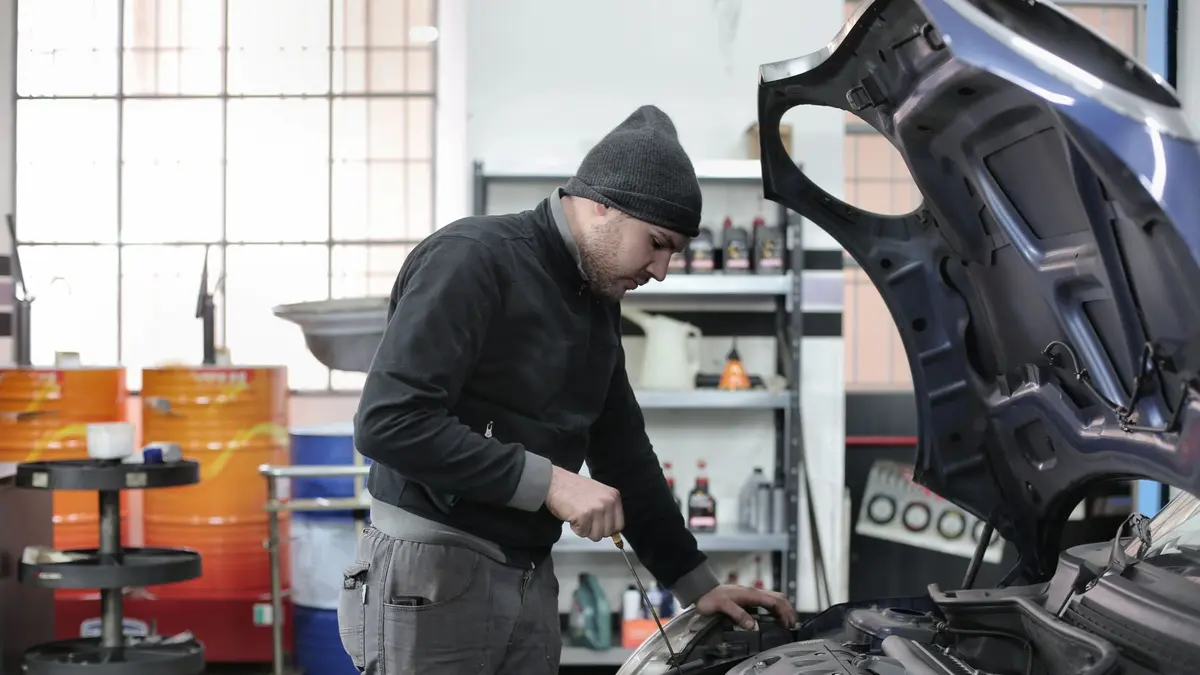
An auto workshop in the UAE juggles more than most people realise. A single car might arrive for a routine service, turn into a brake job and a set of tyres, wait two days for a part from a supplier in Sharjah, and leave with an invoice split between the customer and an insurer. Meanwhile the front desk is answering calls about other cars, technicians are asking which job is next, and somebody is trying to work out why the stock count for oil filters never matches.
Most independent garages still run on paper job cards, a whiteboard and an accounting package that sees only the final invoice. That works until it does not: a part is fitted but never billed, a customer disputes work they say they did not approve, or the owner has no idea which technicians are productive and which bays sit empty half the afternoon. Workshop management software exists to close those gaps.
From check-in to delivery: the job card is the backbone
Everything in a workshop revolves around the job card. A good system creates it the moment the car arrives, linked to the vehicle and the customer, and keeps building on it until the car leaves.
- Vehicle check-in — plate number, VIN, mileage, fuel level and photos of existing damage, captured on a tablet at reception so there is no argument later about a dent that was already there.
- Inspection and estimate — technicians record findings against the job, and the system builds an estimate from labour times and parts prices.
- Customer approval — the estimate goes to the customer, usually by WhatsApp or SMS, with a link to approve or decline each item. The approval is recorded with a timestamp.
- Technician assignment and time tracking — jobs assigned to bays and technicians, with clock-on and clock-off so actual time can be compared with quoted time.
- Parts issue — parts drawn from stock against the job card, so nothing leaves the store without being charged to a job.
- Quality check and delivery — a final checklist, the invoice, and a service reminder scheduled for the next visit.
When this flow is digital, the front desk can answer "where is my car?" without walking into the workshop, and the owner can see the status of every vehicle on one screen.
Parts and inventory: where money leaks
Parts are usually the largest cost in a workshop and the most poorly controlled. Fast-moving consumables such as oils, filters and brake pads need minimum stock levels and reorder alerts. Slow-moving or expensive parts need to be ordered against a specific job, tracked from supplier to bay, and billed. Garages that work across several brands need to cope with OEM and aftermarket part numbers for the same component.
The workshop system should handle purchase orders, supplier pricing, goods received, stock transfers between branches and periodic stock counts. Most importantly, it should make it impossible, or at least obvious, when a part is issued but not invoiced. In our experience that single control often pays for a large part of the system.
Insurance work and fleet accounts
Accident repair and insurance-funded work follow a different process from retail servicing. There is a survey, an estimate submitted to the insurer, approval (sometimes partial), and then billing that may be split between the insurer and the customer's excess or depreciation share. Each insurer has its own forms and expectations, and payment often comes weeks later.
Software for a body shop or a garage doing insurance work should track each claim through its stages, store the photos and documents the insurer asks for, record approved amounts against the estimate, and age insurer receivables separately so finance can chase them. Fleet customers, such as rental companies, delivery firms and corporates, bring their own requirements: purchase order numbers, approval limits, consolidated monthly invoicing and service history reports per vehicle.
UAE context: VAT, waste and staff
Workshop invoices need to be valid tax invoices under FTA rules, showing labour, parts and any sublet work clearly with VAT at 5%. Insurance jobs complicate this because the insurer and the customer may each receive an invoice for their share, and the software needs to get that split right.
Workshops also have environmental obligations around used oil, batteries, tyres and other waste, typically overseen by the municipality in each emirate. Keeping a record of what was collected and by whom is easier when disposal is logged in the same system. Requirements differ by emirate and change over time, so check the current rules with your local authority. On the people side, technician productivity data feeds into commission or incentive schemes, and payroll needs to work with the WPS if salaries are processed in-house.
Keeping customers coming back
Workshops live on repeat business. A customer who had a good experience and receives a sensible reminder when the next service is due is likely to return; one who has to call three times to find out whether their car is ready probably will not. Service reminders based on date and mileage, WhatsApp updates as the job progresses, digital invoices and a simple service history the customer can see all build trust. Arabic and English messaging is worth getting right, because a large share of car owners prefer one or the other.
Reports a workshop owner should actually look at
The useful numbers are mostly about capacity and leakage: bay and technician utilisation, sold hours against clocked hours, average invoice value, parts margin, comeback rate (cars returning for the same issue), insurer receivables by age, and conversion of estimates into approved work. If the system cannot produce these without an export to Excel, it is not doing its job.
Off-the-shelf or custom?
For a single-site garage with standard servicing work, a good off-the-shelf workshop package is often the sensible choice, and we would say so. The market is well served for the basics. Custom development makes more sense for multi-branch groups, workshops attached to dealerships or rental fleets, operations with a large insurance or fleet book, or businesses that want a branded customer app. It also makes sense when the workshop needs to connect tightly with an existing ERP or accounting system rather than running in isolation.
Making the switch
The biggest risk in rollout is the workshop floor going back to paper because the tablets are slower than the clipboard. Keep the technician interface minimal, test it in a real bay before go-live, and migrate customer and vehicle history first so the front desk sees immediate value. Stock should be counted and loaded fresh rather than imported from an inaccurate old system.
Our approach with garages is to spend time at reception and in the workshop before designing anything. The software should follow how a good service advisor already works, just without the paper and the guesswork.
Frequently asked questions
Yes. The usual approach is to send a message with a secure link to the estimate, where the customer approves or declines each item. The approval is recorded against the job card for later reference.
Good systems track the claim from survey to payment, store photos and documents, record approved amounts and split invoicing between insurer and customer. Many basic packages handle this poorly, so check it specifically.
They will if the screens are simple and faster than paper. Large buttons, minimal typing and photo capture work well. Involving a couple of senior technicians in testing helps a lot.
Usually, yes. Invoices, payments and purchase costs can flow into most accounting systems used in the UAE, which removes double entry and keeps VAT reporting consistent.