Order Management for Printing and Packaging Companies in the UAE
Suneeb · Founder, Engineering & delivery
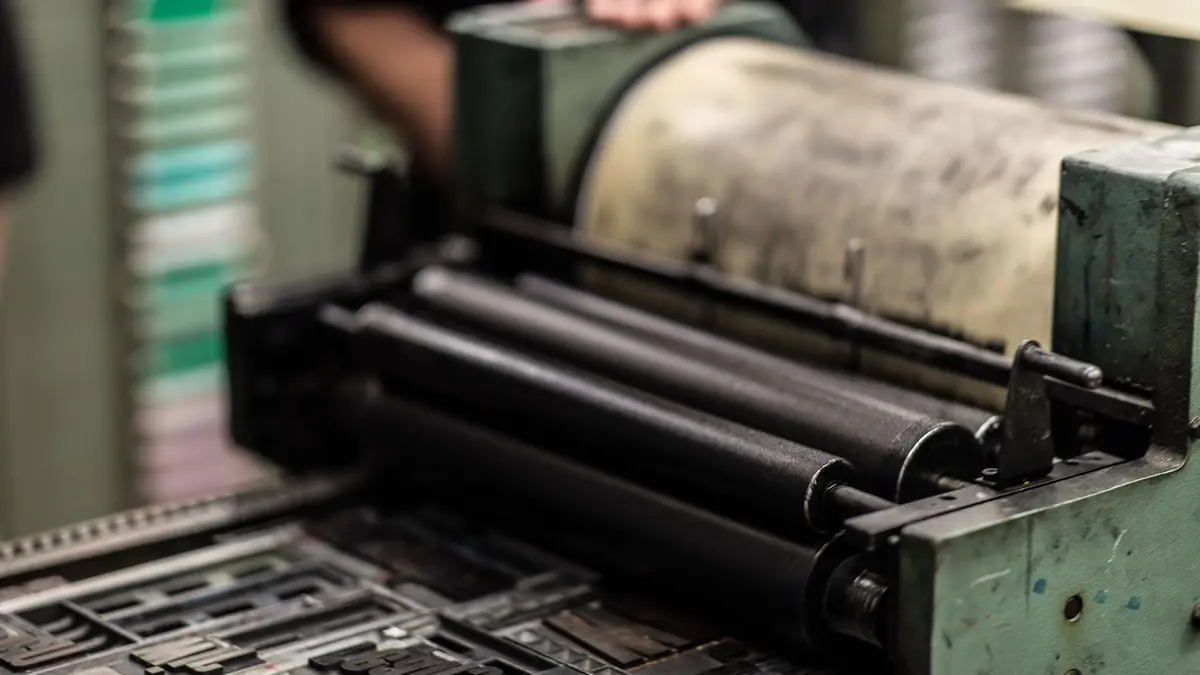
Printing and packaging in the UAE is a high-mix, deadline-driven business. A typical week might include a run of corrugated boxes for an FMCG distributor in Jebel Ali, branded carrier bags for a mall retailer, a rush of event signage for a conference at the World Trade Centre, and a few hundred restaurant menus that have to be reprinted because a price changed. Every one of those jobs has its own specification, artwork, substrate, finishing and delivery address, and most of them arrive by email or WhatsApp with half the information missing.
The companies that run well are rarely the ones with the newest presses. They are the ones that know, at any moment, which jobs are quoted, which are waiting for artwork approval, which are on the floor, and which are ready to go out. That knowledge usually lives in a mix of spreadsheets, a production whiteboard and the heads of two or three senior people. Order management software is about getting it out of those heads and into a system everyone can see.
Quoting is where margin is won or lost
Print quoting is genuinely complicated. A price depends on quantity breaks, paper or board grade, number of colours, special finishes such as lamination, foiling, embossing or spot UV, die-cutting, make-ready time, wastage allowance and delivery. Many shops quote from a spreadsheet that one estimator maintains, and the result is inconsistent pricing and quotes that take a day to come back.
A good system turns your costing logic into rules: material costs per sheet or per square metre, machine rates per hour, set-up times, finishing costs and margin targets. Sales staff can then produce a consistent quote in minutes, and the estimator only gets involved for genuinely unusual work. Just as importantly, when the job is complete you can compare quoted against actual material and machine time, which is the only reliable way to find out which product lines are quietly losing money.
The core workflow from enquiry to delivery
Whatever the size of the operation, the same sequence repeats. The software should support each step without forcing people back onto email:
- Enquiry and quote — capture the customer's specification in a structured form, generate the price, and send a professional quote with validity dates and terms.
- Artwork and proofing — upload customer files, run basic preflight checks, share a digital proof, and record the customer's approval with a timestamp so there is no argument later about who approved a typo.
- Job ticket — convert the approved quote into a job ticket with every production detail: stock, imposition, machine, finishing route and packing instructions.
- Scheduling — place jobs on presses, cutters and finishing lines with realistic capacity, and see clashes before they happen rather than on the morning of delivery.
- Materials — reserve stock against jobs, flag shortages early, and raise purchase orders for board, inks or plates.
- Dispatch and proof of delivery — plan deliveries across emirates, capture signatures or photos on a driver's phone, and close the job.
- Invoicing — raise a VAT-compliant invoice from the job, including any agreed overs or unders, and pass it to accounting.
Packaging brings its own complications
Packaging work tends to be repeat business on long-running specifications, which changes what the software needs to do. You need a product master for each customer item, with dieline references, board grade, print specification and approved artwork version, so that a reorder is a few clicks rather than a fresh round of questions. Version control on artwork matters a great deal; printing ten thousand boxes with last season's design is an expensive mistake.
Food and pharmaceutical packaging customers may also ask for batch and material traceability, certificates for food-contact materials, or evidence of quality checks. Even where no regulator demands it of you directly, your customer's own compliance obligations often flow down to their packaging supplier. A system that records which board batch and ink went into which job makes those requests easy to answer.
Call-off orders are another packaging pattern: a customer agrees a large quantity, you produce it, and they draw it down over months. The software should track what has been produced, what has been delivered, what is sitting in your warehouse under their name, and what is still to invoice.
UAE context: VAT, free zones and multi-emirate delivery
Invoicing must meet FTA requirements for tax invoices, and if you sell into free zones or export across the GCC the VAT treatment can differ depending on the circumstances. That logic belongs in the system rather than in someone's memory, and it should be checked with your tax adviser because the rules are detailed and do change. The UAE is also moving towards structured e-invoicing, so it is worth choosing software that can adapt when the requirements are finalised for your business; check the current timelines with the FTA.
Delivery planning has a distinctly local flavour too: industrial areas in Sharjah and Ajman, warehouse docks with fixed receiving windows, mall loading bays with their own rules, and Salik costs on regular routes. A simple dispatch board that groups deliveries by area and time window saves real driver hours.
Integrations worth planning for
Order management rarely lives alone. The common integrations are accounting (Zoho Books, QuickBooks, Xero, Tally or an ERP such as Odoo or Microsoft Dynamics), a web-to-print storefront for business cards and simple products, customer portals for large accounts, and occasionally a connection to prepress or press management software where the equipment supports it. WhatsApp notifications for proof approvals and dispatch updates are popular with UAE customers because that is where they already are.
What to measure
Once the data is in one place, a handful of numbers tell you most of what you need to know: quote-to-order conversion rate, average quote turnaround time, on-time delivery percentage, reprint and waste rate by cause, machine utilisation, and quoted versus actual cost by product type. None of these need fancy dashboards to start with; they need consistent data, which is what the workflow above produces.
Off-the-shelf or custom?
There are mature print MIS products on the market, and for a commercial printer whose work fits their model they can be the right answer. They come with estimating engines and press integrations that would take a long time to build. Where they struggle is in mixed businesses: a company that does offset, large-format, packaging and promotional items, with its own way of pricing and a team that will not adopt a system designed for a European commercial printer.
A sensible middle path is often to keep accounting in a standard package, and build a focused order and production system around your actual quoting rules and job flow. If a commercial MIS covers eighty percent of what you do and your team is willing to adapt, buy it. If you find yourself running the MIS plus three spreadsheets to make it work, that is a sign custom may pay off.
Rolling it out without stopping production
Print shops cannot pause for a system migration. Start with quoting and job tickets, because that gives immediate visibility and clean data. Add scheduling once the team trusts the job records, then dispatch and customer portals. Import your customer list and repeat product specifications early, since that is where the time savings appear first. Train the production supervisors properly; if the floor does not update job status, the whole picture falls apart.
At Zellarc, we start these projects by sitting with the estimator and the production manager to map how jobs really move, including the workarounds. From there we decide with you what to buy, what to integrate and what is worth building, and we deliver in phases so the business keeps printing throughout.
Frequently asked questions
Yes, if the pricing rules are modelled properly. Quantity breaks, materials, machine time, finishes and wastage can all be expressed as rules, leaving only genuinely unusual jobs for manual estimating.
Customers receive a proof link, review it, and approve or request changes. The approval is recorded with a timestamp and the approved file version is locked to the job, which removes most disputes about errors.
Usually. Most common accounting packages used in the UAE offer APIs, so invoices and customer records can sync automatically. We will check the specific package and version before committing to an approach.
No. Smaller shops often benefit most, because a few people are carrying the whole operation in their heads. The scope simply starts smaller, typically with quoting, job tracking and invoicing.