Multi-Currency Accounting and Inventory for UAE Traders
Suneeb · Founder, Engineering & delivery
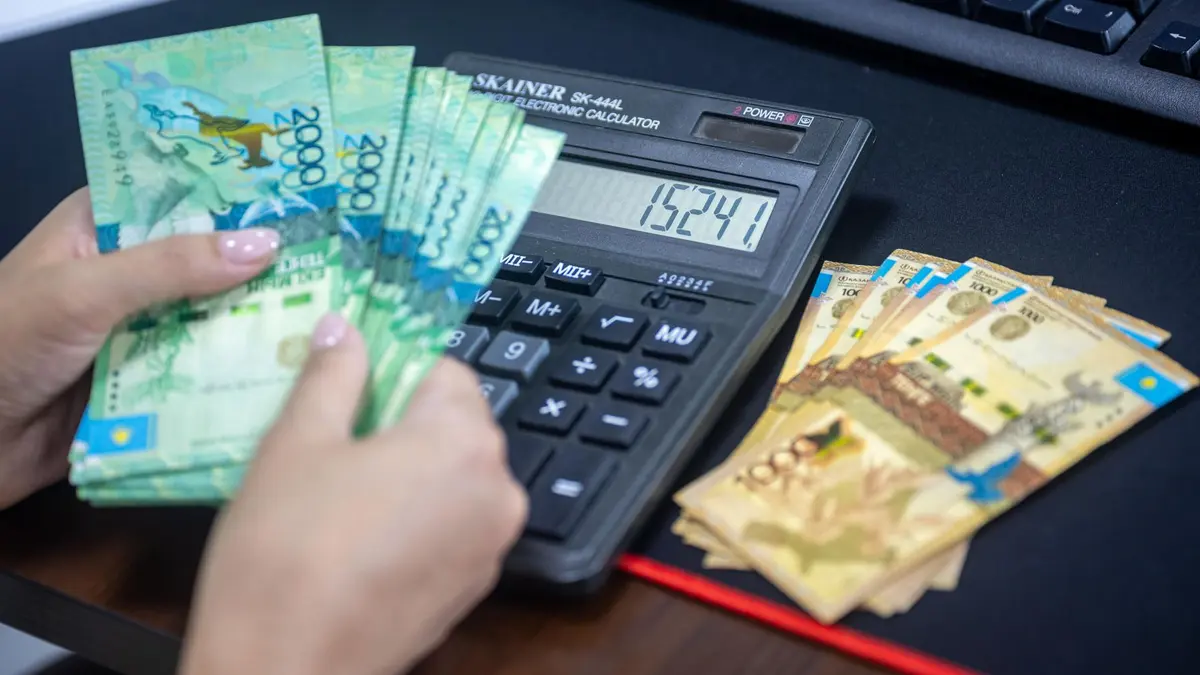
Very few UAE trading businesses deal in one currency. Goods are bought in US dollars from Asia, in euros from Europe, freight is billed in another currency again, and the goods are sold in dirhams locally and in other currencies across the region. The books, meanwhile, are kept in AED and VAT is reported in AED.
Getting this right affects more than the accounts. It changes what your stock is worth, what your margins really are and what you report to the Federal Tax Authority. This guide explains the main concepts in plain terms and sets out what your accounting or ERP software needs to do. It is general guidance, not tax or accounting advice; confirm the treatment for your business with your accountant or tax adviser.
Why multi-currency is the norm for UAE trading businesses
The UAE's role as a re-export hub means traders routinely buy in one currency and sell in another. The dirham is pegged to the US dollar, so USD exposure behaves differently from euro, pound, rupee or yuan exposure, but the accounting still has to record each transaction properly. Businesses that settle supplier invoices weeks or months after receiving goods are carrying currency risk whether they track it or not.
Recording foreign-currency purchases and sales
Most businesses keep their books in a single functional currency, usually AED. Each foreign-currency transaction is recorded in its transaction currency and translated into AED at the exchange rate on the transaction date.
Decisions you need to make, and your software needs to support:
- Which rate source you use, for example a bank rate or the Central Bank rate, applied consistently.
- Who maintains the rates and how often: daily, weekly or per transaction.
- Whether a document can carry its own rate, for example when a supplier invoice states a contracted rate.
Illustrative example (rates are invented for the example, not real):
- You receive a supplier invoice for EUR 10,000 of goods.
- The rate on the invoice date is 4.00 AED per EUR.
- The purchase and the supplier balance are recorded at AED 40,000, while the supplier ledger also shows EUR 10,000 owed.
Landed cost and inventory valuation
The purchase price is rarely the full cost of getting goods onto your shelf. Landed cost adds the other costs of bringing them in: freight, insurance, customs duty, clearing and handling. These often arrive on separate invoices, from different suppliers, in different currencies, sometimes weeks after the goods.
To value stock properly, those costs need to be allocated to the items they relate to. Common allocation methods:
- By value — costs spread in proportion to each item's purchase value.
- By quantity — equal share per unit.
- By weight or volume — suits freight-heavy goods where bulk drives cost.
If landed costs are not allocated, stock is undervalued and margins look better than they are, until the costs hit the profit and loss account in one lump. If goods are sold before the freight invoice arrives, the system needs a way to adjust cost of sales as well as remaining stock.
Illustrative example: the EUR 10,000 shipment above (AED 40,000) incurs freight billed in USD and customs duty and clearing billed in AED. Translated and added together, these costs are allocated across the shipment's items, and each item's unit cost increases accordingly. Stock is then valued at purchase cost plus its share of landed cost.
Realised vs unrealised FX gains and losses
Exchange rates move between the date you record an invoice and the date you pay it. That difference has to go somewhere.
- Realised gain or loss arises when you settle. Continuing the illustrative example: if you pay the EUR 10,000 when the rate is 4.05, you pay AED 40,500. The supplier balance was AED 40,000, so you record a realised FX loss of AED 500.
- Unrealised gain or loss arises at period end on balances still open. If the invoice is unpaid at month-end and the rate is 4.02, the balance is revalued to AED 40,200 and an unrealised loss of AED 200 is recorded. Many systems reverse this at the start of the next period so the realised figure is calculated cleanly on payment.
Revaluation applies to open customer and supplier balances and to foreign-currency bank accounts. It does not usually change the cost of stock already received; that was fixed at the transaction rate.
VAT invoices and AED amounts
You can invoice customers in a foreign currency, but VAT is accounted for in dirhams. As we understand the FTA's tax invoice guidance (VAT11), where a tax invoice is issued in a foreign currency the VAT amount must also be shown in AED, converted at the rate the FTA accepts, which is generally the UAE Central Bank rate. The details matter, so confirm current requirements with the FTA or your tax adviser rather than relying on this summary.
For your software this means each invoice line needs the transaction currency amount, the AED equivalent, the VAT in AED and the rate used, stored with the document so it can be reproduced exactly later. Our guide to VAT-compliant invoicing software covers the wider invoice requirements.
E-invoicing adds to this. As the UAE moves to structured e-invoices exchanged through Accredited Service Providers, currency and AED tax amounts will need to be carried correctly in the structured data, not only on the printed document.
Bank accounts, payments and reconciliation in multiple currencies
- Keep a separate ledger account for each foreign-currency bank account, recorded in both its own currency and AED.
- Partial payments against foreign-currency invoices need the realised FX calculated on the portion paid.
- Bank charges and conversion spreads should be recorded separately from FX gains and losses, so you can see what conversions really cost you.
- Bank reconciliation should be done in the account's own currency; the AED figure follows.
- Customer and supplier statements should be available in the transaction currency, because that is what the other party sees.
Re-exports and free-zone considerations
Many traders operate from free zones or move goods through them for re-export. Whether a supply is treated as an export, a supply within a designated zone or a local supply affects the VAT treatment, and customs documentation must line up with your stock records. These rules are specific and fact-dependent, so take professional advice for your set-up. What your software can do is record the information needed to support the treatment: delivery destination, customs references, zone status and the documentary evidence for each shipment.
What your software must support (checklist)
- A currency per document: purchase orders, supplier invoices, sales invoices, receipts and payments.
- Exchange rate tables with dates, plus the option to override the rate on a specific document.
- Landed cost entry against receipts, with allocation by value, quantity or weight, including costs in other currencies.
- Inventory valuation that includes allocated landed cost.
- Automatic realised FX gain or loss on settlement, including partial payments.
- Period-end revaluation of open balances and foreign-currency bank accounts.
- Tax invoices showing AED VAT amounts and the rate used for foreign-currency invoices.
- VAT reporting in AED that ties back to individual documents.
- Multi-currency customer and supplier statements and ageing.
- Batch and serial tracking where your goods need it.
If you are evaluating systems, inventory management for traders and ERP software for trading companies go into the wider requirements. Muhasib, our cloud business platform, supports multi-currency transactions alongside UAE VAT and multi-warehouse inventory; for workflows that need something more specific, we build ERP for trading and distribution businesses.
Frequently asked questions
Record the invoice in USD and translate it into AED at the exchange rate on the transaction date. When you pay, any difference between the recorded AED amount and the AED actually paid is a realised FX gain or loss. Because the dirham is pegged to the dollar, these differences are usually small, but bank rates and charges can still create them.
As we understand the FTA guidance, yes, provided the VAT amount is also shown in AED using an accepted exchange rate. Confirm the exact current requirements in the FTA's tax invoice guide (VAT11) or with your tax adviser.
It is the change in AED value of a foreign-currency balance that is still open at period end, such as an unpaid invoice or a foreign-currency bank balance, when it is revalued at the closing rate. It becomes realised when the balance is settled.
Add freight, insurance, customs duty, clearing and similar costs to the purchase price, translated into AED, then allocate the total across the items received by value, quantity or weight. The result is the unit cost used to value stock and calculate margin.
If you buy or sell in any currency other than AED, yes. Without it, staff end up converting by hand, which creates errors in invoices, VAT returns, stock values and supplier balances.