Agritech and Farm Management Software in the UAE
Suneeb · Founder, Engineering & delivery
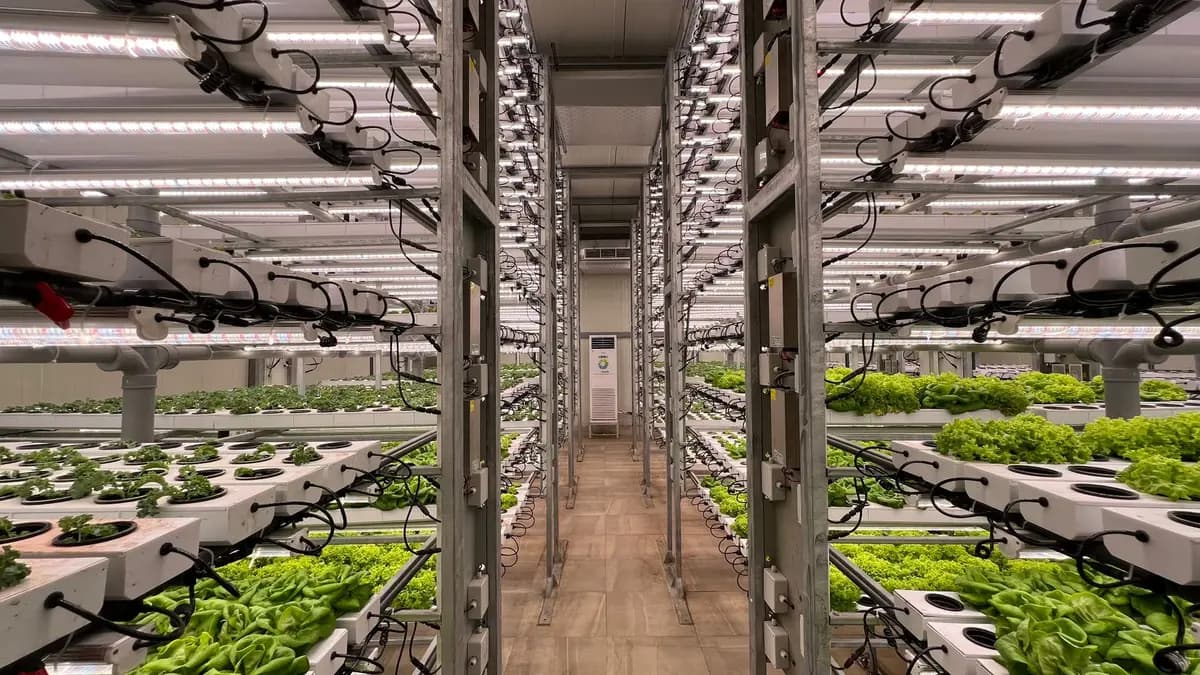
Farming in the UAE operates under conditions most of the world never faces: extreme summer heat, very limited fresh water, high energy costs for cooling and soils that are poor for many crops. Despite that, food security is a national priority, and the country has seen steady growth in controlled environment agriculture: hydroponic and vertical farms, climate-controlled greenhouses, aquaculture and modern poultry and dairy operations, alongside traditional farms growing dates and vegetables.
Controlled environment agriculture is data-heavy by design. Temperature, humidity, light, nutrients, irrigation and energy all have to be controlled precisely, and the margins depend on doing that efficiently. That makes software a core part of the operation, not an accessory. The challenge for most growers is joining the data from sensors and control systems with the business side of the farm: planting plans, labour, harvest, quality, sales and costs.
Two layers: control systems and farm management
It helps to separate two kinds of software. The first is the control layer: climate computers, irrigation and fertigation controllers, lighting systems and sensors, usually supplied with the growing equipment. The second is farm management: planning, operations, inventory, traceability, sales and finance. The control layer keeps the plants alive; the management layer tells you whether the farm is a viable business. Most of the value from custom development comes from connecting the two.
What farm management software should handle
For a modern UAE farm, the core workflows usually include:
- Crop planning — what to plant, where and when, based on demand, growing cycles and capacity, so harvests match orders rather than flooding the market.
- Growing operations — seeding, transplanting, spraying, pruning and harvesting tasks scheduled and recorded by zone or batch, with labour time captured.
- Inputs and inventory — seeds, nutrients, growing media, packaging and crop protection products tracked by batch, with usage recorded against crops.
- Harvest and yield — yields recorded per batch and zone, graded by quality, and compared with expected yields.
- Traceability — each packed product linked back to its batch, zone, inputs and harvest date, which retailers and food safety authorities increasingly expect.
- Sales and distribution — orders from supermarkets, restaurants, hotels and direct consumers, with delivery scheduling and invoicing.
Water, energy and climate data
Water and energy are the defining costs of farming in the UAE. Tracking water use per kilogram of produce and energy use per zone turns sustainability claims into numbers, and it shows where improvements actually pay off. Connecting sensor and controller data to the management system lets growers compare climate conditions with yields and quality over time, which is how growing recipes improve.
Alerts matter as much as reports. A cooling failure in July can destroy a crop within hours, so monitoring systems should send immediate alerts by app, SMS or WhatsApp to the right people, with an escalation path if nobody responds.
Regulation, food safety and sustainability
Agriculture in the UAE is overseen at federal level by the Ministry of Climate Change and Environment, with emirate-level bodies and municipalities involved in food safety and licensing. Requirements for pesticide use, registration of farms, food safety and labelling differ by emirate and activity, so confirm current rules with the relevant authorities. Many growers also pursue certifications such as GLOBALG.A.P. or organic certification to meet retailer and export requirements, and these depend heavily on good records.
Software that records inputs, applications, harvest and packing by batch makes audits much easier. It also supports sustainability reporting, which larger retail customers and investors increasingly ask for, and which ties into the UAE's wider sustainability goals.
Selling to retailers, restaurants and consumers
Local produce has a strong selling point in the UAE: freshness and shorter supply chains compared with imports. To make the most of that, the sales side has to be organised. Supermarket customers expect accurate deliveries, product data, barcodes and invoices that match their purchase orders, sometimes through EDI or supplier portals. Restaurants and hotels want flexible ordering and reliable delivery windows. Direct-to-consumer subscription boxes are popular with some growers and need their own e-commerce, subscription management and delivery routing.
Invoicing must handle VAT correctly and meet FTA requirements. Pricing often varies by customer and season, and the system should handle contract prices, promotions and returns or rejected deliveries.
KPIs for a modern farm
The useful metrics combine growing and business performance: yield per square metre, yield against plan, grade-out rates, water and energy per kilogram, labour hours per kilogram, cost of production per crop, waste and unsold produce, on-time delivery and revenue and margin per crop and customer. Seeing those together is what lets a farm decide which crops to grow more of and which to drop.
Off-the-shelf or custom?
There are farm management platforms available, many designed for open-field agriculture in other countries, and some aimed at greenhouses and vertical farms. For a smaller grower with standard crops, one of them combined with the equipment supplier's control software may be enough, and we would recommend trying that first.
Custom development is usually justified for larger or more innovative operations: vertical farms with their own growing methods, farms combining several production types such as hydroponics and aquaculture, operations that need to integrate several control systems, or businesses with a direct-to-consumer brand. The custom work is often an integration and data layer that pulls sensor, operational and sales data into one place, plus specific tools for planning and traceability.
Rolling it out
Start with the records that matter most for the business: planting, harvest, yields and sales. Then connect sensor and control data, and add more detailed costing as the data matures. Field and greenhouse staff need simple mobile tools that work in heat and with gloves, sometimes in several languages, so test them on site. Batch and zone identifiers should be agreed and labelled physically before going live, otherwise traceability will be unreliable from the start.
When we work with agritech companies, we focus on joining up the data that already exists in control systems, spreadsheets and accounting, before adding anything new. A clear link between growing conditions, yield and margin is usually the most valuable outcome.
Frequently asked questions
Often yes, if the controllers provide data exports or APIs. Where they do not, there are usually workarounds such as separate sensors or scheduled data exports. This should be checked with the equipment supplier early.
Retailers, food safety authorities and certification bodies increasingly expect produce to be traceable back to its batch, inputs and harvest date. Good records also make handling quality issues much faster.
By measuring use per zone and per kilogram of produce, linking it to climate settings and yields, and highlighting where changes improve efficiency. Alerts also help prevent losses from equipment failures.
Not necessarily. Many growers start with a standard e-commerce platform with subscription features. Custom work makes sense when the direct channel needs to connect closely with harvest planning and stock.