Building a B2C Travel Booking Website in Dubai
Suneeb · Founder, Engineering & delivery
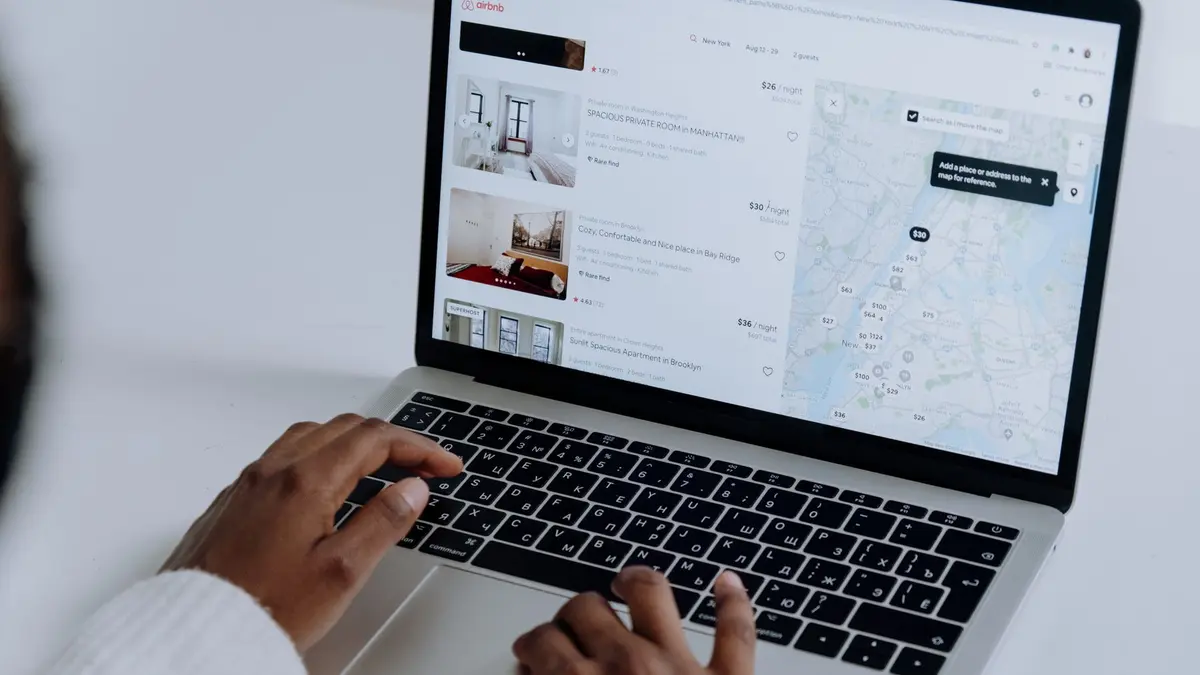
A B2C travel booking website in Dubai lets travellers search, price and book trips online without calling your office. To work, it needs reliable supplier content, clear prices including all fees, a checkout that accepts the payment methods UAE customers actually use, and a back office that turns each online booking into a properly managed file. Most agencies also need a human fallback, usually WhatsApp, because many customers still want to talk before paying for an expensive holiday.
Building a travel booking website for the Dubai market is more involved than a typical e-commerce shop. Inventory changes by the minute, prices depend on dates and occupancy, and a booking is not complete until a supplier confirms it. This guide covers the decisions that matter.
Decide what you will actually sell online
The first decision is scope, and it shapes everything else. Many agencies start by wanting "everything bookable online" and end up with an expensive site that sells little. A more realistic approach is to pick the products where online booking genuinely helps:
- Hotels and staycations — straightforward to book online, popular with UAE residents for weekend breaks.
- Activities and attractions — desert safaris, theme parks, dhow cruises and city tours, where customers are comfortable paying upfront.
- Holiday packages — fixed or semi-fixed packages to popular destinations such as Georgia, Azerbaijan, Turkey, the Maldives or Europe, which can be sold online with set departure dates.
- Flights — technically demanding and low margin, so many smaller agencies leave flight booking to the phone or sell flights only as part of a package.
- Visas and add-ons — UAE visit visas, travel insurance and airport transfers, which work well as upsells during checkout.
A focused site that sells three product types well will usually outperform a sprawling one that does ten badly.
Where the inventory and prices come from
A travel booking website in Dubai is really a front end on top of supplier connections. For hotels that means bedbank or wholesaler APIs, or your own contracted rates. For flights it means a GDS, NDC or consolidator connection; our article on flight booking engine development in the UAE explains what that involves. For activities it might mean your own operated tours plus third-party suppliers.
The key questions are how fresh the prices are, whether you price-check before taking payment, and what happens when a supplier fails to confirm. A well-built site re-checks price and availability at checkout and has a clear process for failed bookings, including automatic refunds or a fast call from your team.
Designing the booking journey for UAE customers
Search and results
Customers expect fast results, sensible filters and honest prices. Show the total including taxes and fees, and for Dubai hotels make it clear whether the Tourism Dirham fee is included or paid at the hotel. Surprises at checkout are a major cause of abandoned bookings.
Product pages
Good photos, clear inclusions and exclusions, cancellation terms in plain language, and practical details such as pickup times or visa requirements. For packages, show a day-by-day itinerary.
Checkout
Keep the form short, capture passenger names exactly as on passports, and offer the payment options residents expect: cards, Apple Pay and, increasingly, buy-now-pay-later options such as Tabby or Tamara for larger holiday spends. Our guide to payment gateways for UAE travel booking websites covers the trade-offs.
Language
English is enough for many Dubai audiences, but Arabic matters if you target Emirati and GCC travellers. A proper bilingual site with right-to-left layout is a design decision from day one, not a translation bolted on later.
WhatsApp and the human side of online booking
In the UAE, WhatsApp is often the real conversion channel. Many customers browse your site, then message to ask a question before booking. Rather than fighting this, design for it: add WhatsApp buttons on product pages that pass the product and dates into the chat, so your consultant does not have to ask what the customer was looking at. Log those conversations in your CRM so you can measure which pages generate enquiries. Over time you can automate common answers, but keep a human available for high-value bookings.
Step-by-step: building a travel booking website in Dubai
- Pick your launch products — the two or three categories with the best margin and online demand.
- Secure supplier access — sign API agreements, get test credentials and understand certification requirements.
- Design the journey — wireframe search, results, product, checkout and confirmation on mobile first, since most traffic will be on phones.
- Build the booking and back-office flow — every online booking should create a file your team can see, amend and reconcile.
- Integrate payments and messaging — gateway, BNPL if relevant, email and WhatsApp confirmations.
- Prepare content and SEO — destination pages, product descriptions and structured data written for how people search.
- Test real bookings — including cancellations, failed payments and supplier errors, before launch.
- Launch, measure and iterate — watch conversion by step and fix the biggest drop-off first.
SEO and speed: getting found in the first place
A travel booking website in Dubai competes with global online travel agencies that spend heavily on advertising. You will not out-spend them, but you can out-specialise them. Destination guides written from real local knowledge, pages targeting specific searches such as "Georgia holiday package from Dubai" or "Abu Dhabi staycation deals", and fast-loading pages all help. Travel sites tend to be image-heavy and script-heavy, so performance needs active attention. Our article on SEO for travel agencies in Dubai goes into the detail.
Compliance, data and trust
You will be collecting passport details, dates of birth and payment information, so treat security seriously: HTTPS throughout, a PCI-compliant gateway that keeps card data off your servers, and careful access control. The UAE PDPL sets expectations around personal data, so publish a clear privacy policy and only collect what you need. Display your trade licence details and physical address; customers are more willing to pay a local agency they can verify. For VAT on online sales, take advice on your model and make sure invoices and receipts are generated correctly for each booking.
How Zellarc builds travel booking websites
We treat a travel website as a booking system with a marketing layer on top, not the other way round. That means designing the supplier flow and back office alongside the visual design, so the site that wins the booking also helps your team deliver it. Where a plug-in booking engine is the sensible option, we will integrate one rather than rebuild it. You can see more on our e-commerce development page.
Frequently asked questions
It depends mainly on the number of products, supplier integrations and languages. A site selling your own packages with enquiry and payment is relatively modest; a full multi-supplier booking engine with flights and hotels is a substantial software project. Supplier licence and API fees should be budgeted separately.
WordPress can work for content and simple package bookings, especially with a reputable booking plug-in. It becomes harder to manage when you add live supplier APIs, complex pricing and a full back office. Many agencies use WordPress for content and a separate booking engine for transactions.
Selling travel services generally requires an appropriate trade licence, issued in Dubai by the Department of Economy and Tourism. Requirements vary by emirate and by the activities you carry out. Check current rules with the relevant authority before launching.
For holidays and higher-value packages, BNPL options like Tabby or Tamara can lift conversion among UAE residents. They add fees and their own approval rules, so test whether the margin works for your products. They are less useful for low-value activities.
A focused site with your own packages can launch in a few weeks to a couple of months. A site with multiple live supplier integrations typically takes several months, largely because of supplier certification and testing. Launching with fewer products first is usually faster and less risky.